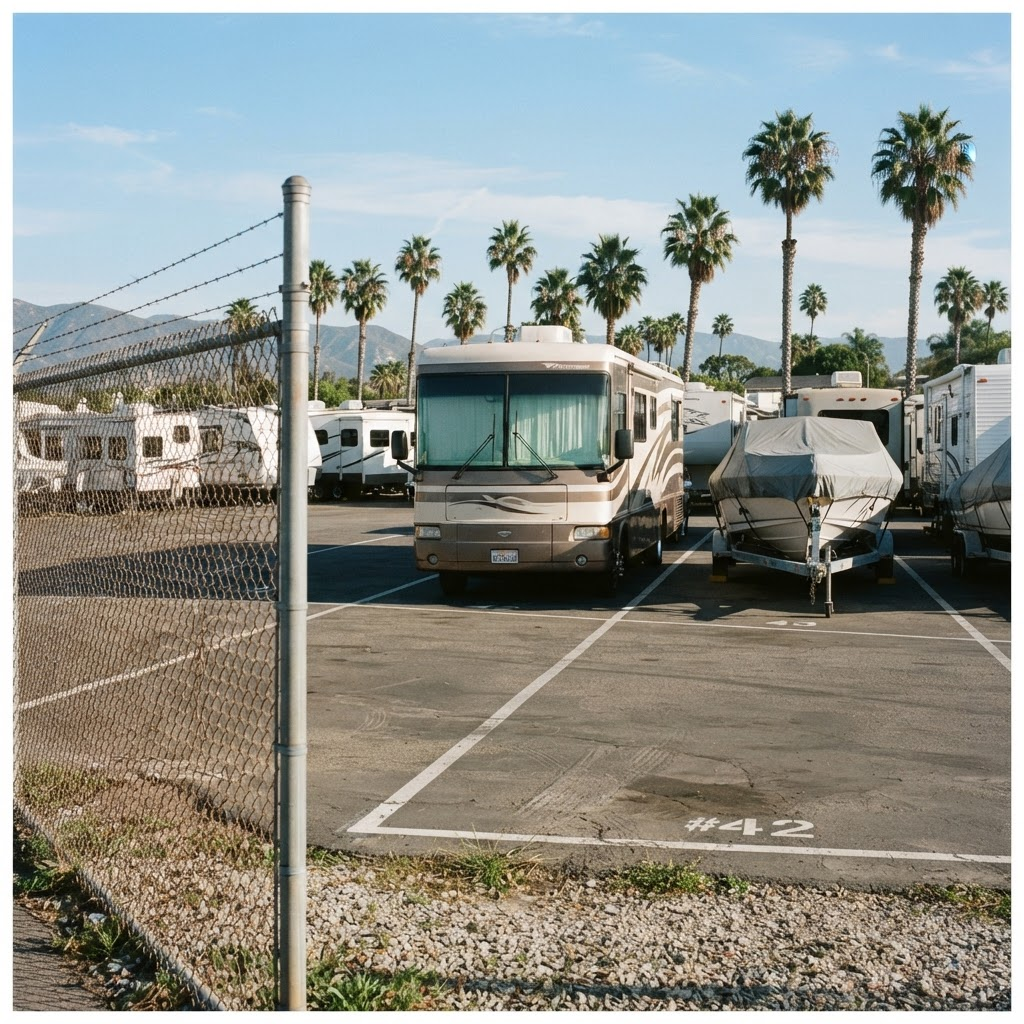
Storing an RV, trailer, or boat that you are not using for a season or longer raises a reasonable question: do you still have to keep paying to register it with the DMV while it sits parked and unused?
For California owners, the answer involves a specific and often overlooked option called Planned Non-Operation, or PNO. Used correctly, it can save you money on a vehicle you are not driving. Used incorrectly, or forgotten entirely, it can leave you with penalties and back fees.
At Don Temple Storage, we work with RV and boat owners across Long Beach who store their vehicles with us for months at a time, and here is what you need to know about PNO.
What Planned Non-Operation Actually Is
Planned Non-Operation is a status you can file with the California DMV that tells the state you are not operating a vehicle on public roads for a given registration period.
According to the California Department of Motor Vehicles, filing a PNO means the vehicle will not be driven, towed, stored, or parked on public roads or highways, and in exchange you pay a modest PNO filing fee instead of the full registration renewal cost.
For a vehicle sitting in storage that you have no intention of driving for a year, this can represent a real savings over paying full registration and the associated fees.
The key concept is right there in the name: planned non-operation. You are declaring in advance that the vehicle will not be operated during the registration year.
This is different from simply letting registration lapse, which is what many owners mistakenly do and which creates problems rather than solving them.
Why Letting Registration Lapse Is a Mistake
When owners store a vehicle and simply stop paying registration, assuming that an unused vehicle does not need to be registered, they are not saving money. They are accruing a problem.
California continues to assess registration fees on vehicles whose registration has expired, and penalties accumulate on top of those fees. When the owner eventually wants to use or sell the vehicle, they discover they owe not just the current registration but back fees and penalties for the entire period the vehicle sat unregistered.
PNO exists precisely to avoid this. It is the legitimate, low-cost way to keep a stored vehicle in good standing with the state without paying full registration.
The Public Road Restriction Matters
The single most important rule of PNO is that a vehicle on non-operation status cannot be driven, towed, or parked on any public road or highway. It must be kept on private property. This is exactly where a private storage facility fits the requirement cleanly.
A vehicle stored at a private, secured facility is on private property, not on a public street, which satisfies the PNO condition. An owner who files PNO but then leaves the RV or boat parked on the street in front of their house is violating the terms of the status and can face citation, in addition to the street-parking issues that oversized vehicles already face in Long Beach. Storing the vehicle on private property is what makes PNO work as intended.
Our RV and vehicle storage keeps your vehicle securely on private property for exactly this reason.
When PNO Makes Sense and When It Does Not
PNO is the right choice when you know you will not be using the vehicle for the registration year and it will be kept off public roads the entire time. A boat stored for the off-season, an RV parked between long trips, or a trailer you use only occasionally are all good candidates.
PNO does not make sense if you intend to take the vehicle out during the period, even once, because operating a PNO vehicle on a public road is a violation.
If you are unsure whether you will use it, standard registration keeps your options open. For a vehicle you are genuinely putting away, PNO is the economical choice.
How to File and Reinstate
Filing for PNO is done through the DMV, and it must generally be filed before the registration expires or within a specific window to avoid penalties, so timing matters. When you are ready to use the vehicle again, you reinstate operational registration by paying the registration fees, and the vehicle returns to normal status.
Because the filing windows and requirements can change, confirm the current process directly with the DMV when you file.
The important thing is not to simply stop paying and assume storage exempts you from registration; it does not, and PNO is the mechanism the state provides for exactly your situation.
Store It Right and Keep It Legal
The combination that protects a stored RV or boat is straightforward: file PNO with the DMV so you are not paying full registration or accruing penalties, and keep the vehicle on secure private property so you meet the terms of that status.
Doing both keeps your stored vehicle both economical and in good legal standing until you are ready to use it again.
Contact Don Temple Storage to arrange secure private storage for your RV or boat, and keep your PNO status valid the entire time it is with us.